

Listed on Outdoorsy
2017 Keystone Montana 5th Wheel
From $119 /night before fees

Colorado RV rentals
Roomy towable RVs with a raised front that rides over a pickup bed.
A fifth wheel is a towable RV with a raised front section that rides over the bed of a pickup truck and locks onto a fifth-wheel or gooseneck hitch in the bed. That raised section usually holds the main bedroom, which leaves room for a large living area, often with slide-outs.
Towing one takes a pickup with a bed-mounted hitch rated for the trailer's weight. If you do not have that truck, book a fifth wheel directly with RVRents™ and add delivery and setup: we bring it to your campsite and level it, and you arrive in your own car.
Book directly with RVRents, with delivery on RVs marked Delivery available, or rent from local owners on Outdoorsy.
Picked up from the owner; RVRents delivery and services are not included. Nightly rates from our last check.
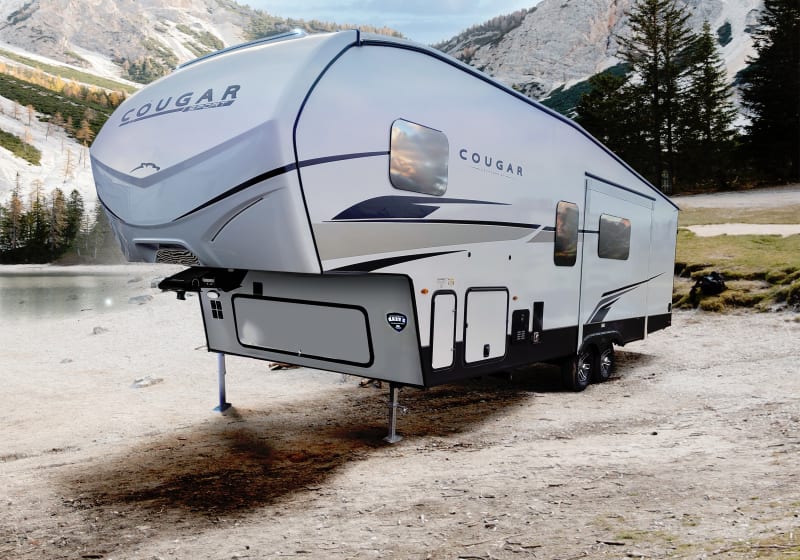
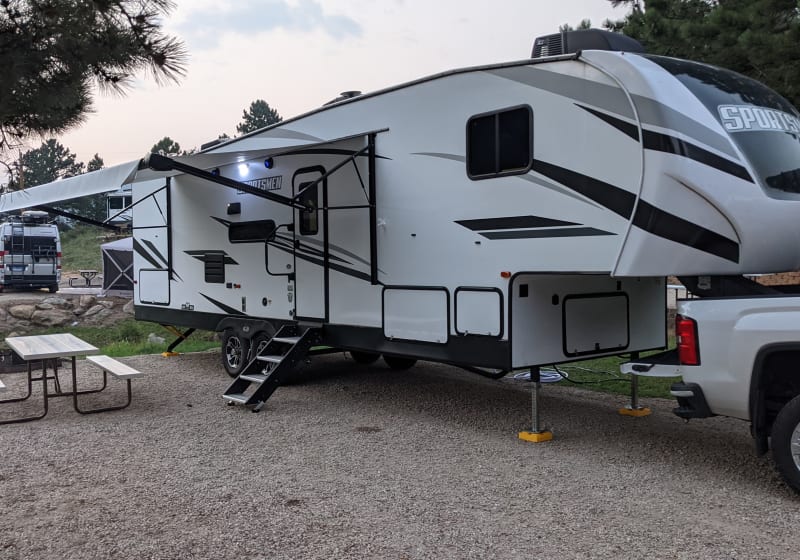
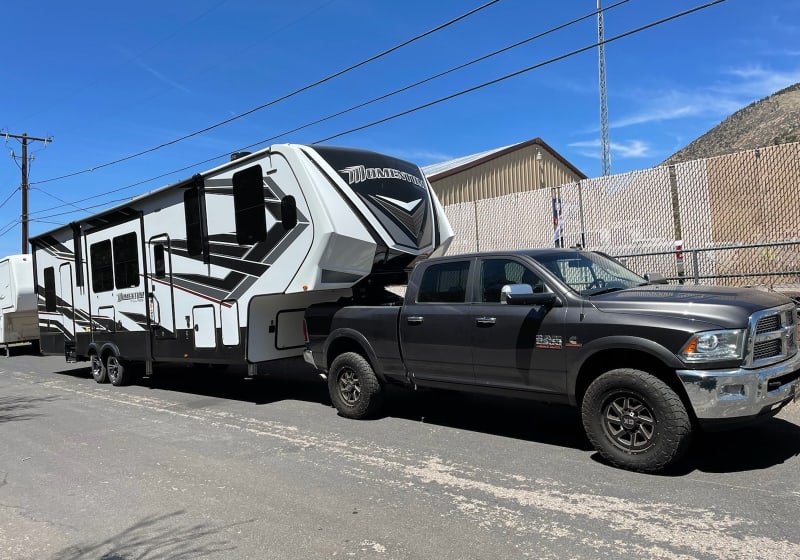

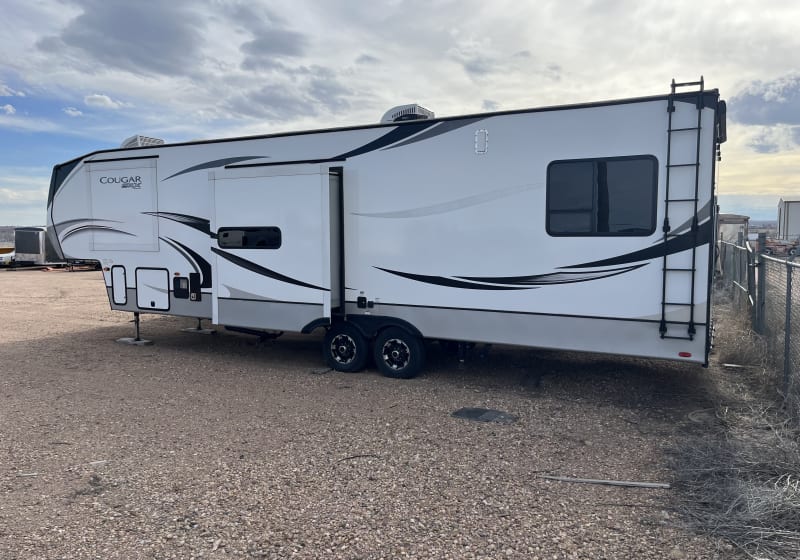
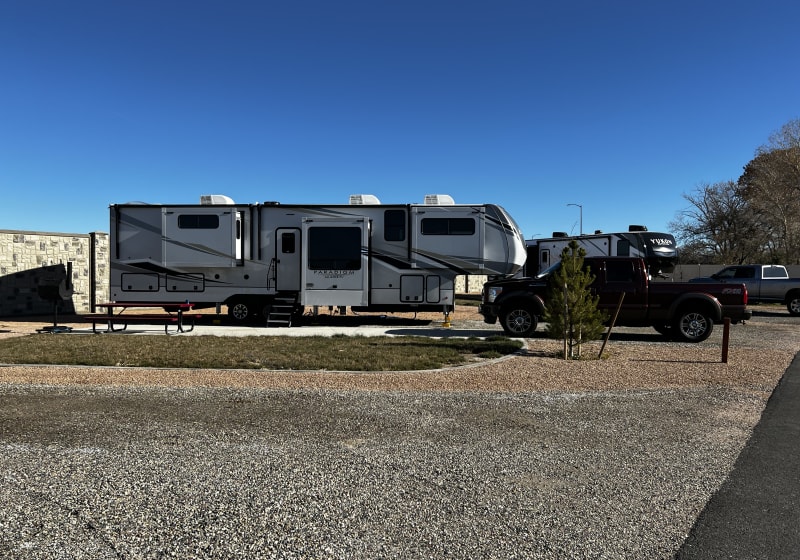
A fifth wheel hitches inside the bed of a pickup, not to the bumper. Its raised front section rides over the truck bed, so the trailer's weight sits on the truck's rear axle. That one design choice is why fifth wheels feel so different from a bumper-pull trailer on the road and at camp.
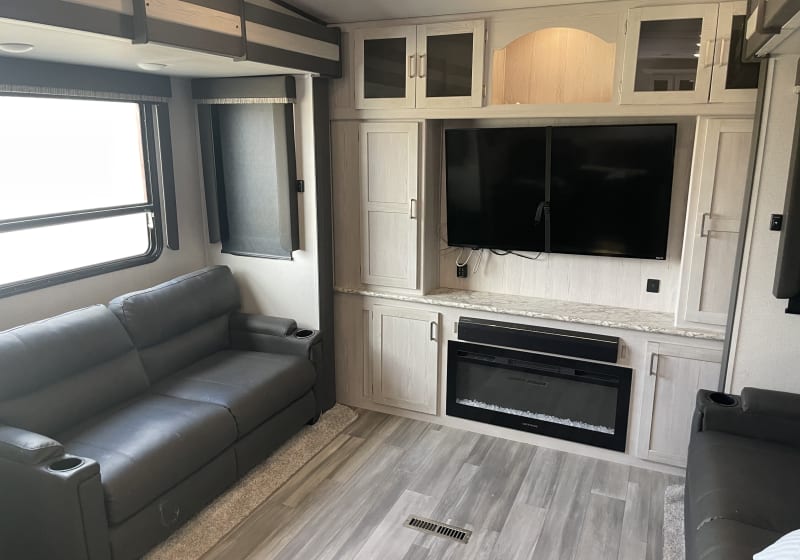
Inside, the raised front usually holds the main bedroom, often with a residential-style bed and closet. The lower level holds the kitchen and living room, frequently with several slide-outs and tall ceilings. Many floor plans add a rear bunk room, a rear living room or a toy hauler garage.
A fifth-wheel hitch is a heavy plate with jaws, bolted into the truck bed. The trailer's king pin drops into the jaws and locks. Most rental fifth wheels are set up for this kind of hitch.
A gooseneck hitch is a ball in the truck bed. A fifth wheel can tow from a gooseneck ball with a pin-box adapter, as long as the adapter is approved by the trailer maker. Check before you rely on one.
Short-bed trucks (roughly a six-and-a-half-foot bed or less) often need a sliding hitch or an extended pin box, so the trailer's front corners clear the truck cab when you turn sharply. Ask the owner which setup the RV uses.
Expect a big, tall trailer: many fifth wheels are around 13 feet high, so watch for low branches, gas station canopies and drive-thru roofs. Mountain passes on I-70 and US highways mean long climbs and long descents; use lower gears on the way down rather than riding the brakes.
Wind is part of driving in Colorado, especially on the plains east of the Front Range and across high valleys. A fifth wheel handles crosswinds better than a similar-length bumper-pull, but a tall trailer still catches wind. Slow down or wait out strong gusts.
If you do not have the right truck, you do not need one: book a fifth wheel directly with RVRents that is marked Delivery available, and we bring it to your campsite and set it up.
Straight answers before you book. Always check the specific RV's weights and your vehicle's ratings.


